Communication in Muskoka
Muskoka can be a vast and challenging region to navigate. In the late 1800s, without paved roads, bridges, or road signs, getting around was a slower and more complicated process. Travel could take days, and waiting for correspondence from home could take even longer.
This exhibit explores the technologies that helped make communication faster and more efficient.
Curator: August Stein
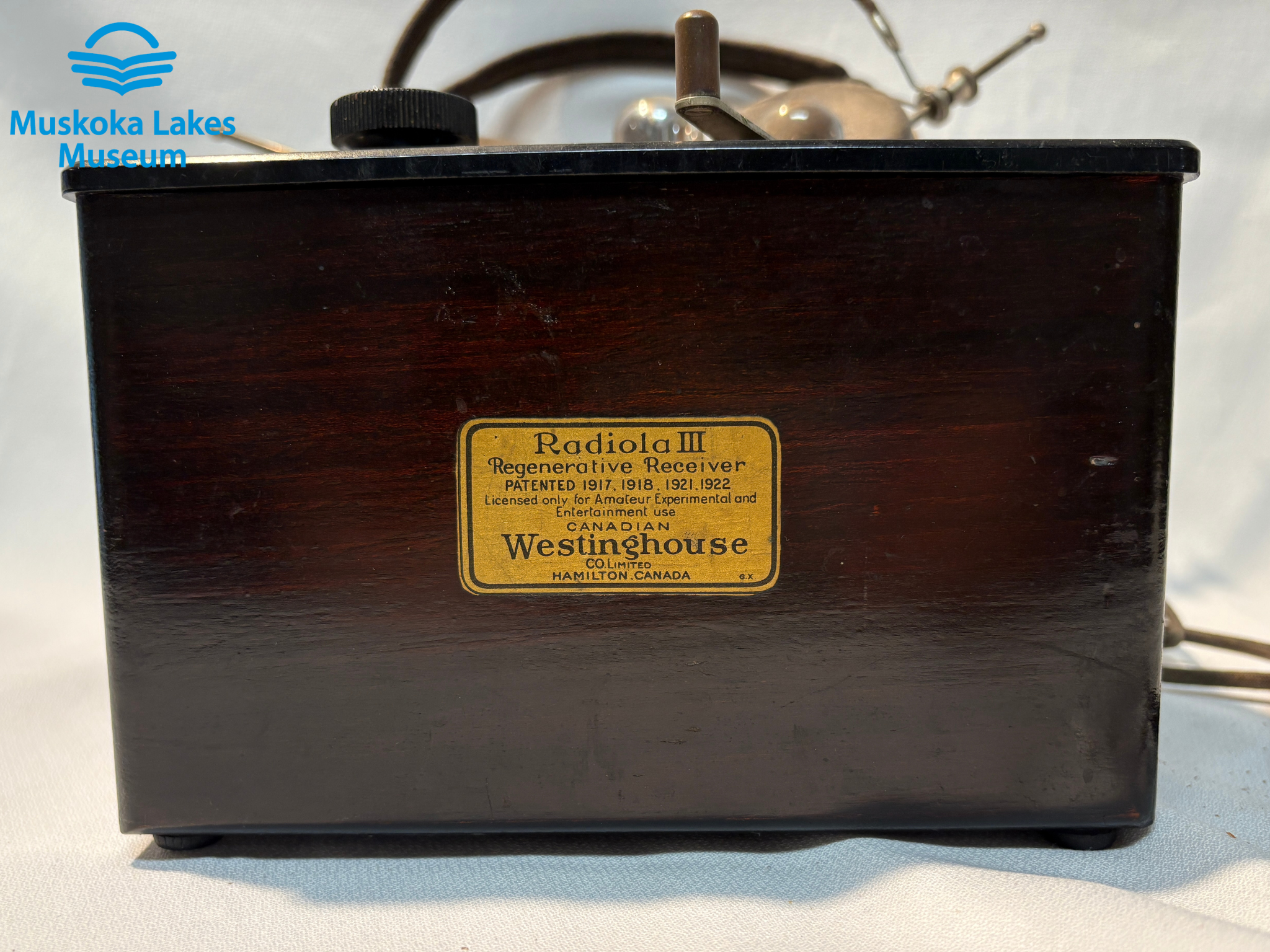
Radio, circa 1925
This radio is a perfect example of how quickly technology transformed communication in Muskoka.
Dating back to 1925, it represents a relatively new innovation at the time—personal-use radios. Created by the Canadian Westinghouse Co. Ltd. in Hamilton, Ontario, the Radiola III receiver was designed for individual listening. It came equipped with a pair of headphones for receiving radio signals but lacked a transmitter. While this radio would have been excellent for picking up broadcasts, it was not capable of sending them.
974.38.1

Wall Phone, early 1900s
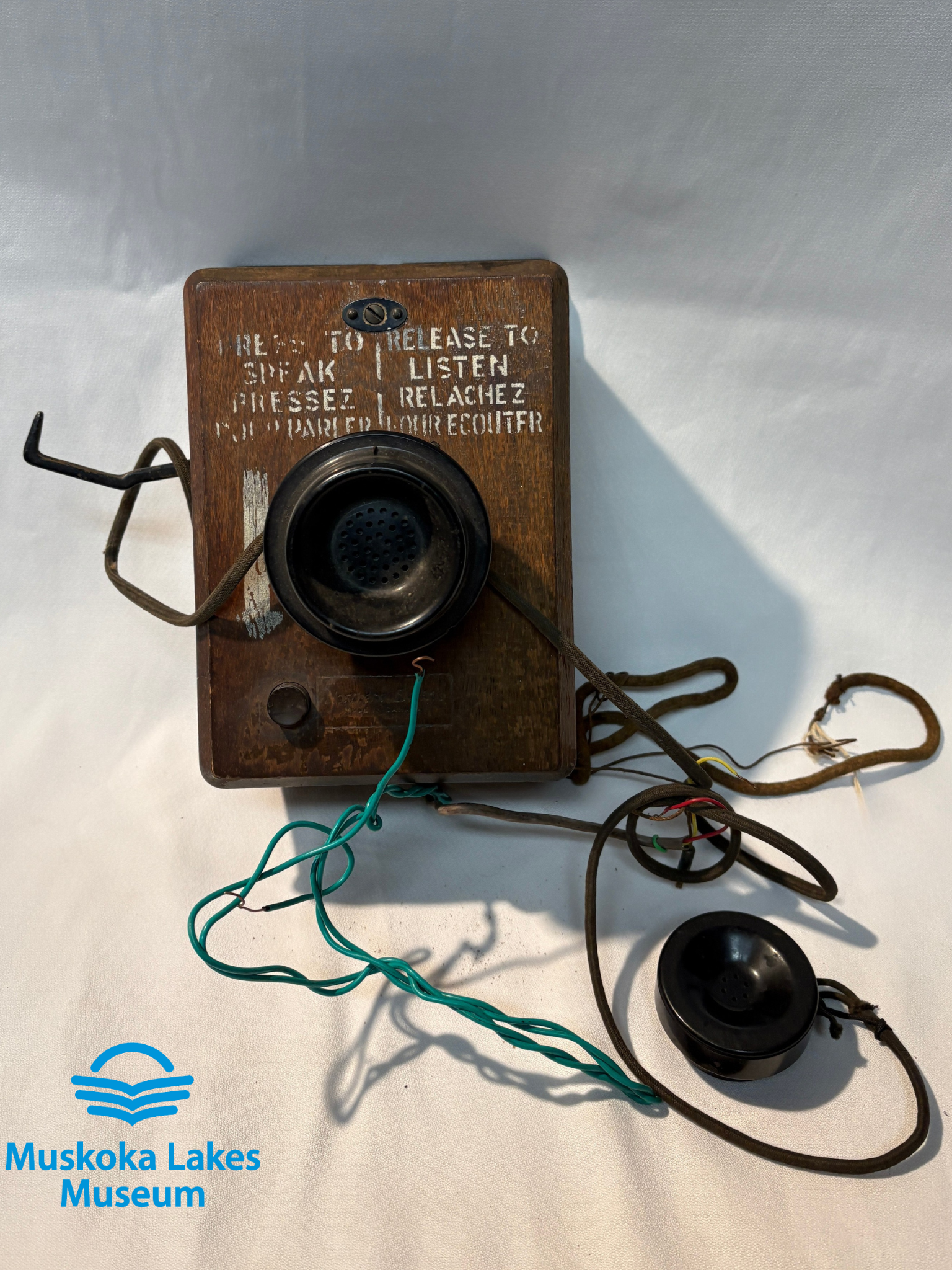
This is an example of a telephone from the early 1900s, manufactured by Northern Electric of Canada—a company that would eventually become Nortel. Unlike the phones we use today, this model operated more like a walkie-talkie; users had to press and hold a button to speak, then release it to listen.
At the time, there was no way to dial a specific number. Instead, picking up the receiver connected you directly to an operator via a hardwired line.
In Port Carling, at 98 Joseph Street, the Bracebridge & Muskoka Lakes Telephone Company was founded in 1907. By 1932, the Medora and Wood Telephone System took over service and constructed a new telephone exchange on the site, with Jim Oliver serving as its first manager. Bell Telephone later assumed control in 1956.
Today, the building is home to the Portside Fusion Restaurant.
988.23.1
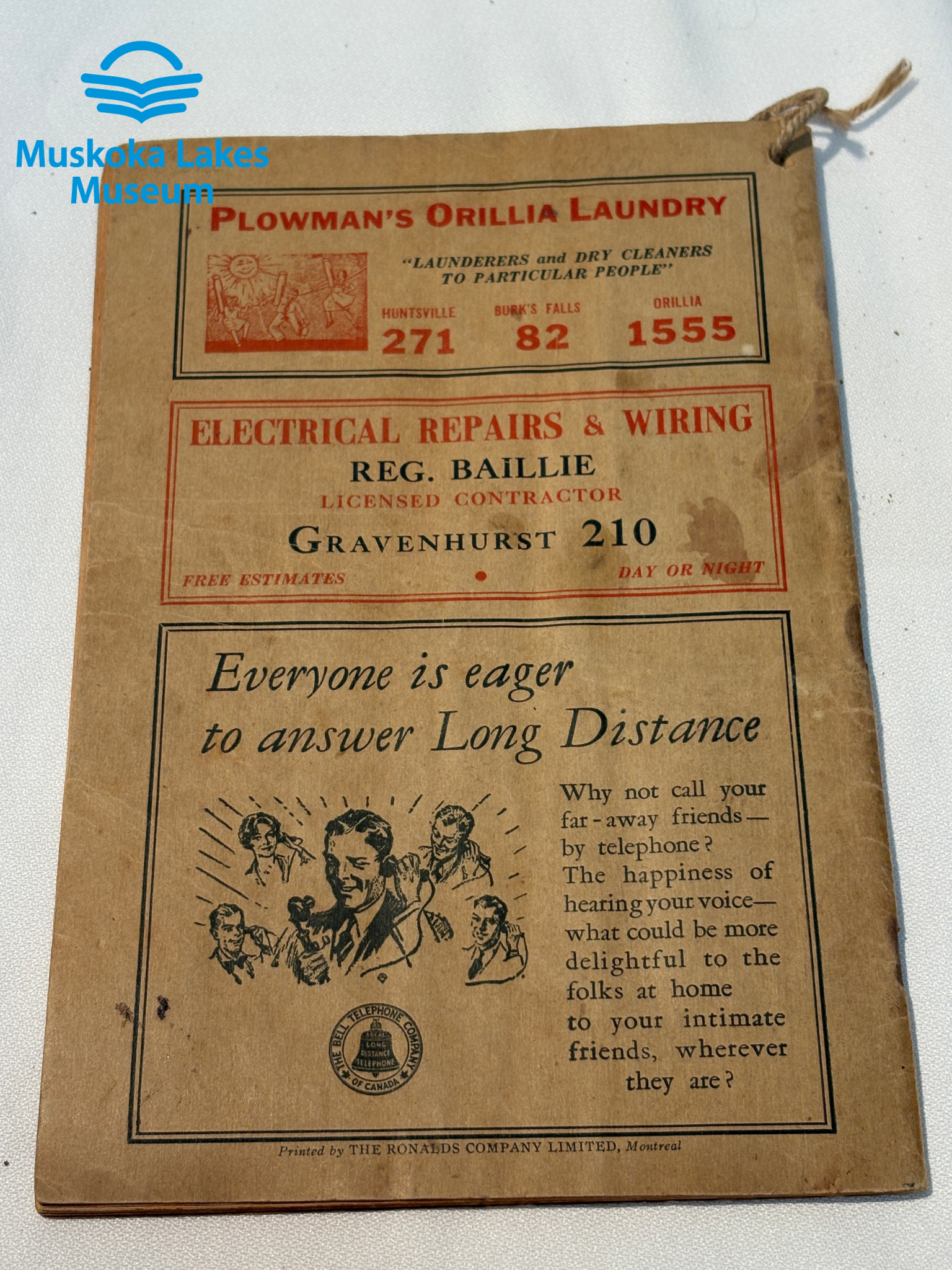
Telephone Directory, 1937
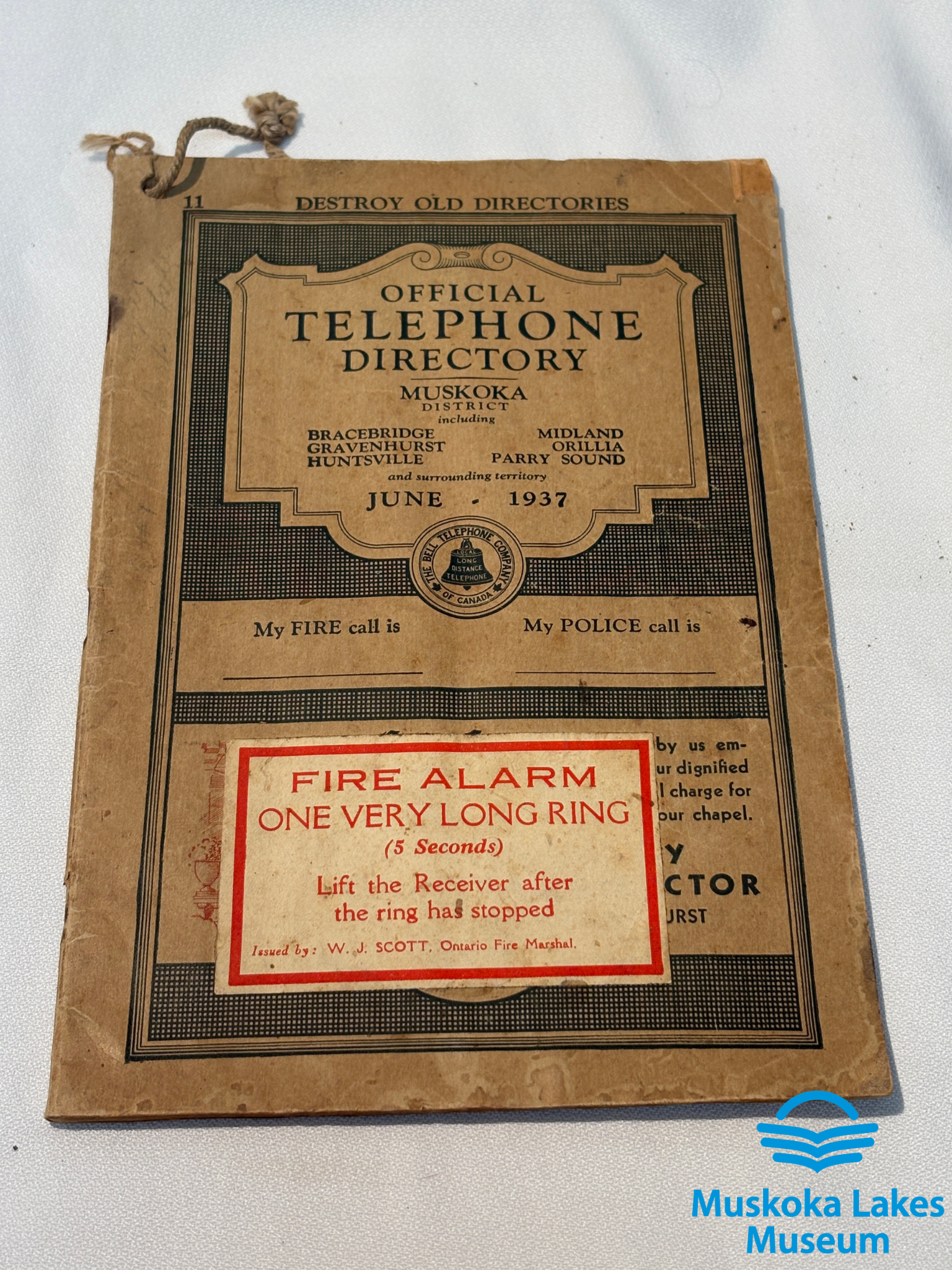
This directory was used by telephone users to indicate where they wanted their calls to be connected. It was especially useful when an operator was required to place the call. Before the internet, directories like this were essential for finding people or locating businesses.
Phonebooks offer a fascinating snapshot of who lived or worked in a community at a given time. The advertisements included also reveal what kinds of services were most important to the area; everything from local trades to dining and entertainment.
996.6.1
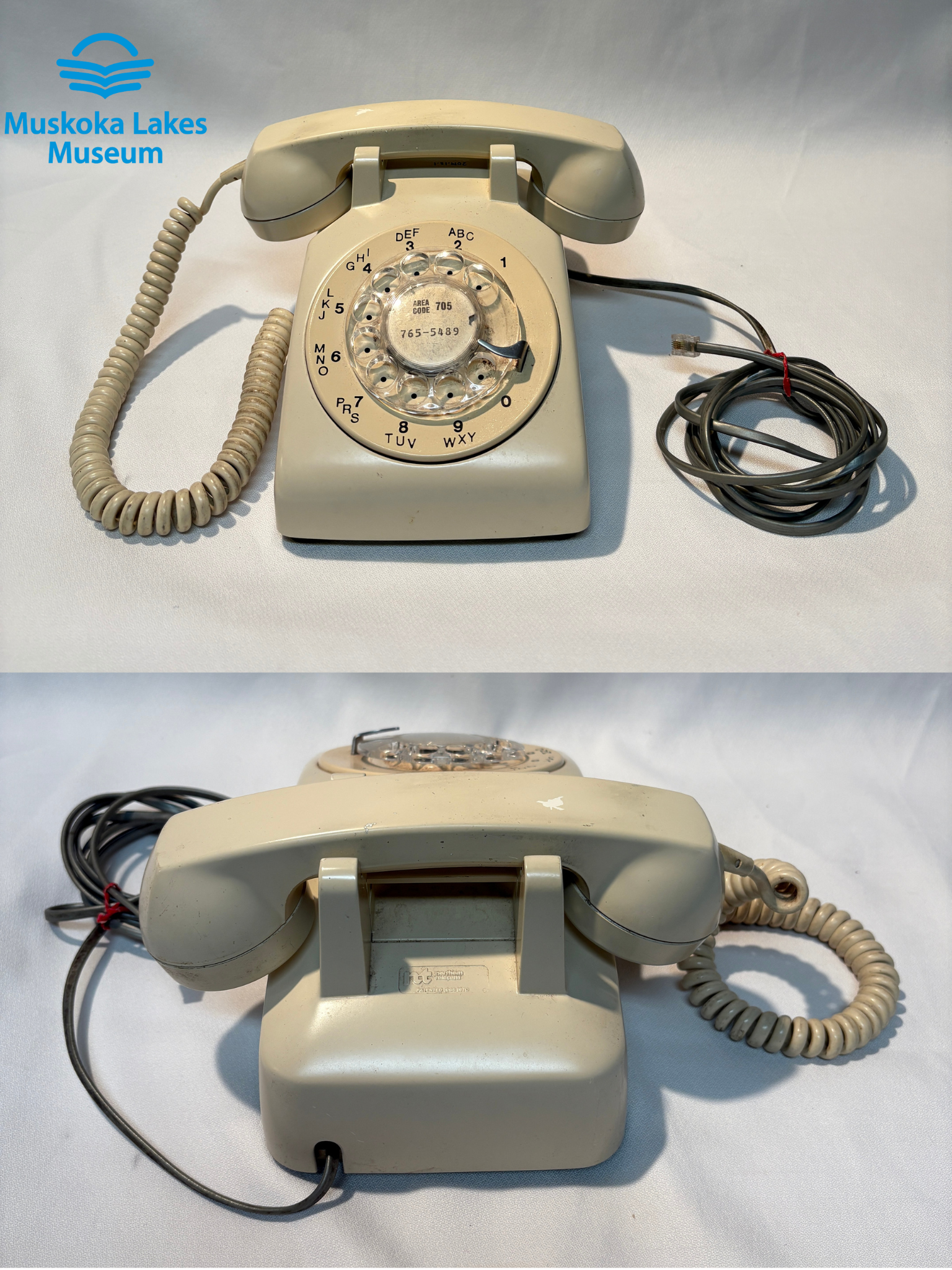
Rotary Phone
Now, a familiar classic: the rotary phone. This iconic device represents a major leap forward in telecommunications technology.
Alongside the ability to dial a specific phone number, the rotary phone began the switch away from requiring an operator to automatic line switching. Rotary phones wouldn’t become commonplace until the mid 1920s, and it took even longer to become common outside of major American cities.
Placing calls to Muskoka was an important contributor to the tourism industry of the region. Booking hotel rooms over the phone was much faster than mail, and easier than going through a second party.
2019.18.1