Ceramics of the Museum
The Museum has a sizeable ceramic collection, and as a result, only are few pieces are displayed at any given time. Some remain in storage not because they lack importance, but because limited provenance or stories make it difficult to tie them to current exhibit themes. Many had been cherished by families for generations, holding deep sentimental value.
Curator: August Stein
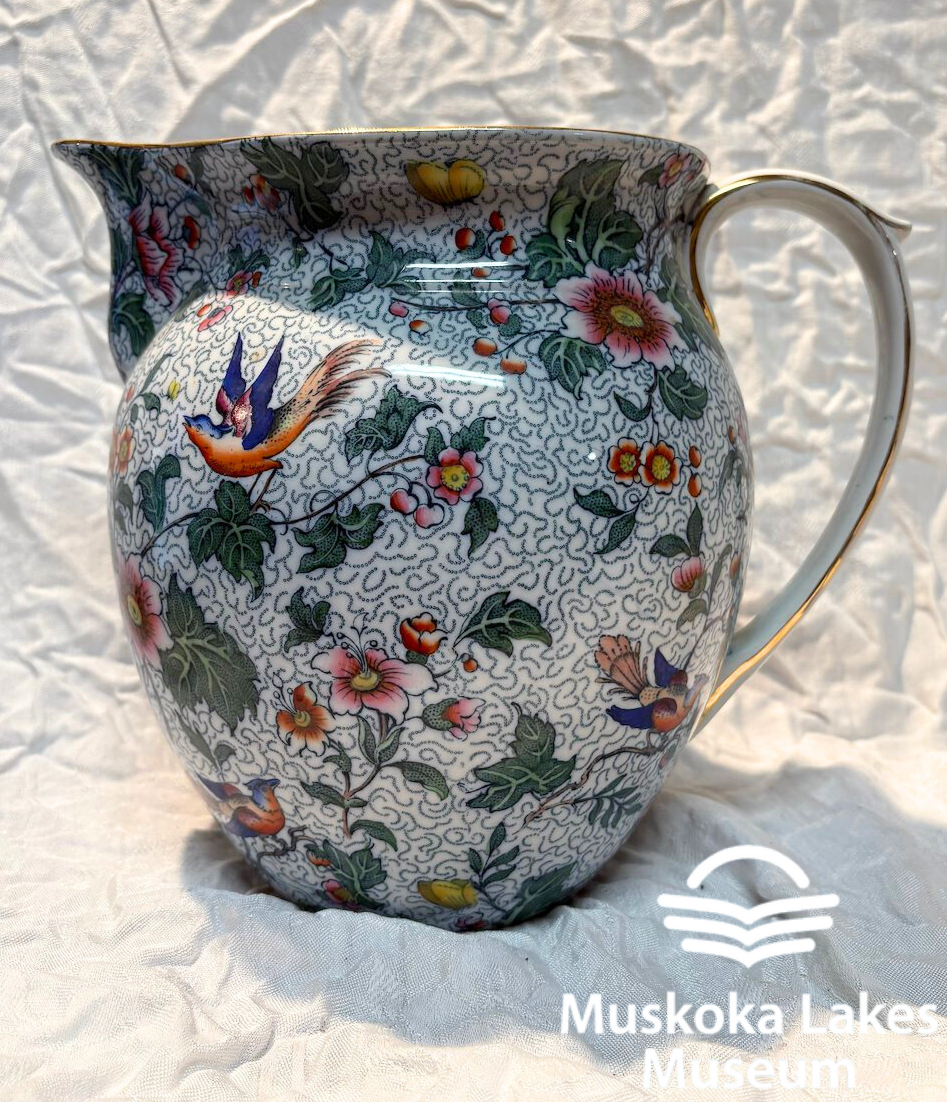
Bird and Flower Jug
This jug, decorated with ornate bird and flower motifs and featuring gold leaf on the handle, is Lasol Ware from Keeling & Co. Ltd. in Burslem, England. It was made between 1912 and 1936.
Many ceramics feature a maker’s mark on the bottom, which helps identify their origin and producer. The mark on this piece reveals both where it was made and the company that produced it. By examining the style of the maker’s mark, we can also estimate when the ceramic was created, as manufacturers often updated their marks over time.
994.3.3
Cheese Cover
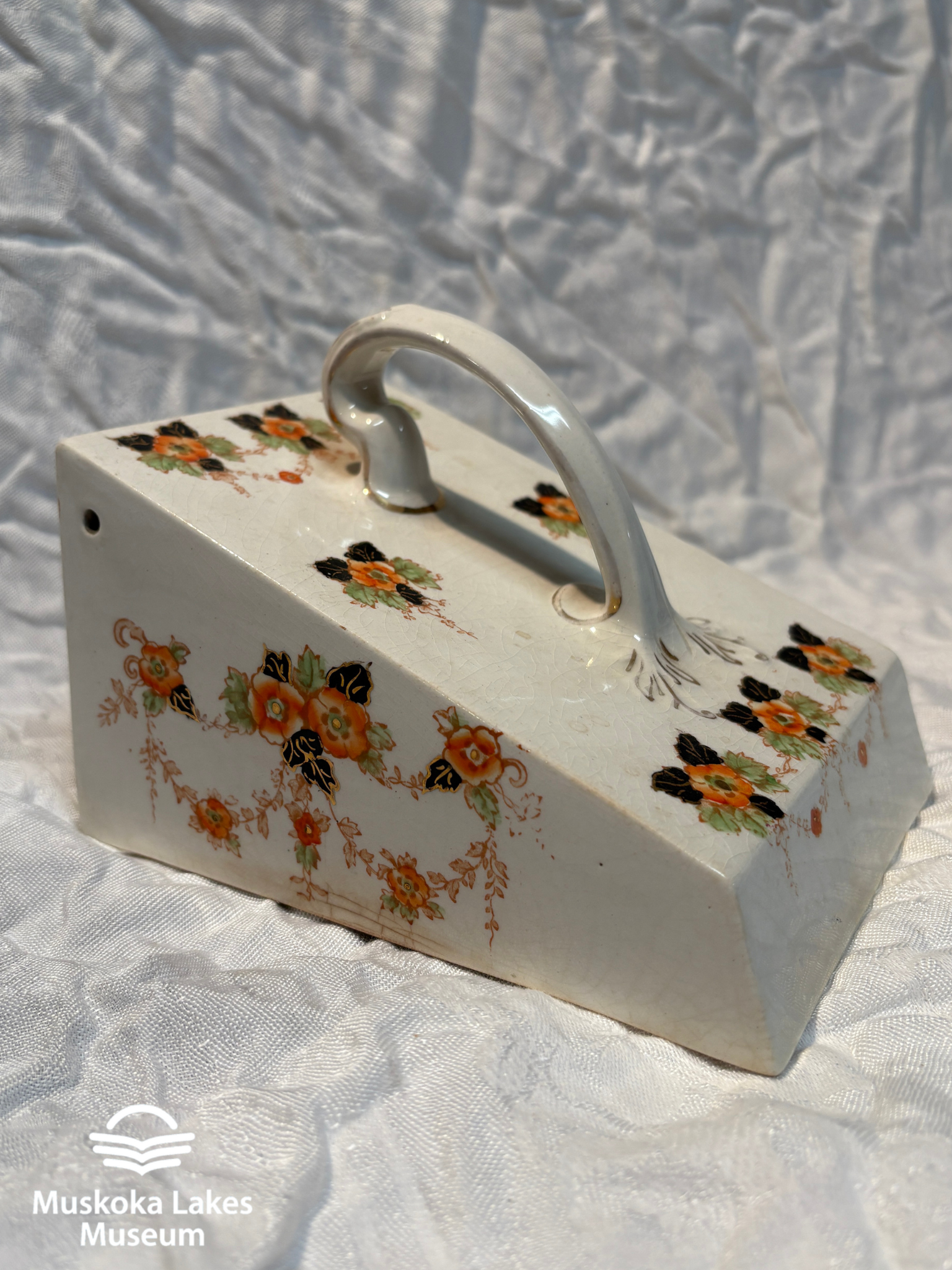
This ceramic cheese cover, once paired with a matching base plate, was produced by Crown Devon Pottery, operated by S. Fielding & Co. in Stoke-on-Trent, England between 1879 and 1982.
This piece is missing its base plate, which limits how we can display it. When artifacts are missing pieces, it can be difficult to determine their original function or purpose. Other cheese covers in the collection retain their matching base plates, providing a clearer and more accurate depiction of its intended use.
979.23.15
Tea Service
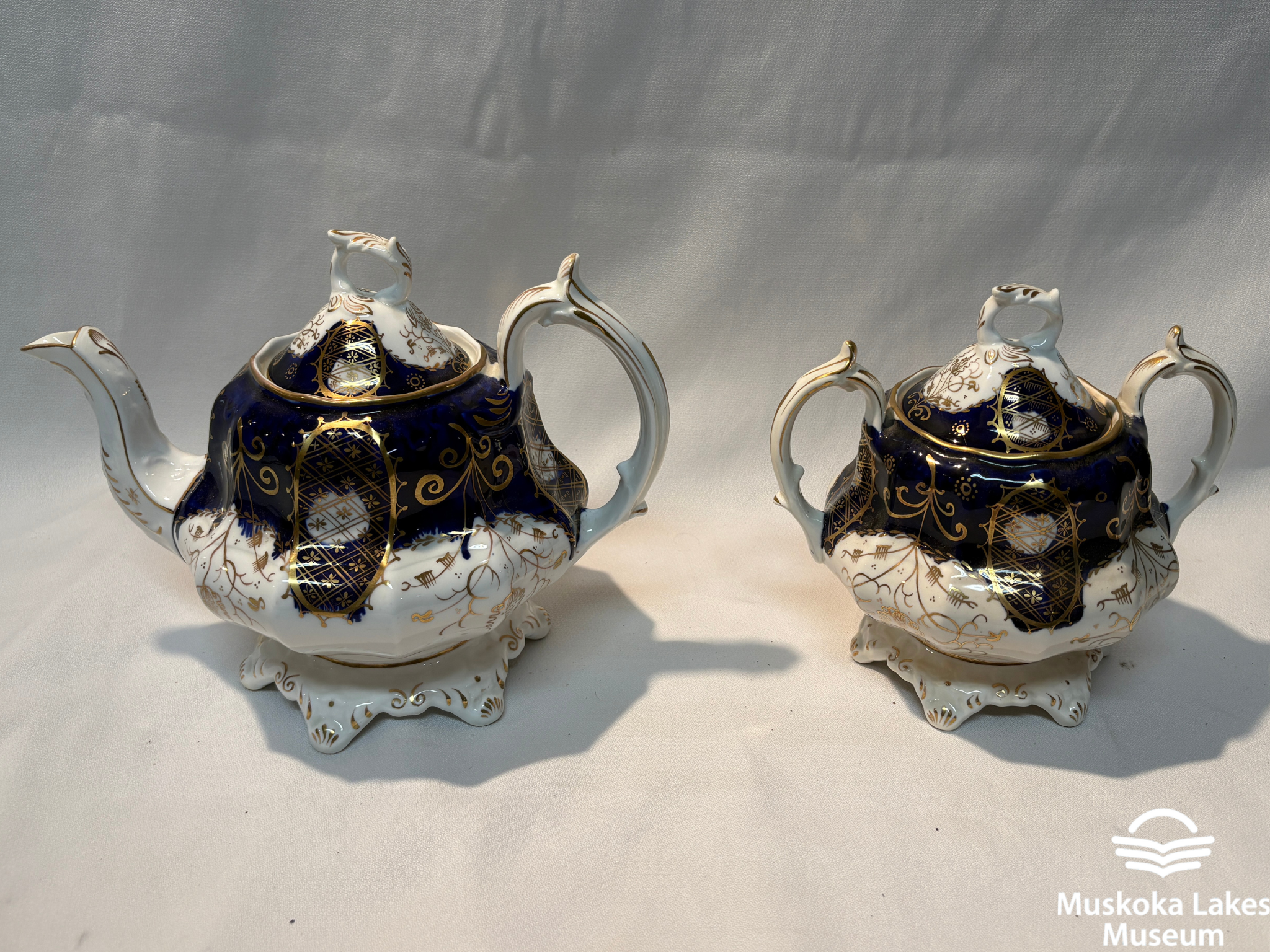
Circa 1820s, this teapot and sugar bowl are part of a larger tea service. Unfortunately, there are no maker’s marks on any of the pieces. The absence of a maker’s mark means that dating and identifying the pieces relies on analyzing the glazed patterns and design motifs typical of the era.
Since we known very little about this set, it can be challenging to interpret it accurately. Though these ceramic pieces are beautiful examples of early 19th-century craftsmanship, their true origins remain unknown.
969.18.1
Decorative Urn
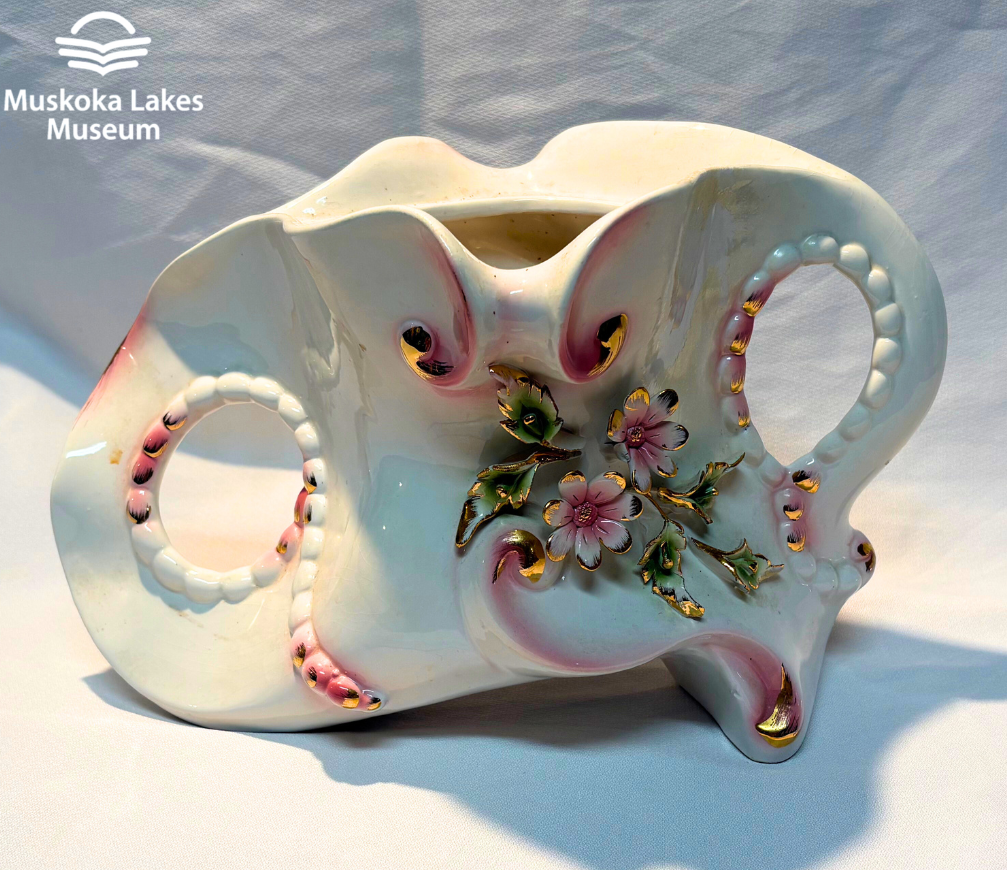
During collection inventories, we occasionally find artifacts in the collection room with no number or no label to assist in locating donor records or the artifact’s provenance. Such is the case for this decorative urn.
The bottom is marked “Bassano, Italy” identifying it as a product of Bassano Ceramics, a family-run business from northern Italy that began in the 17th century and is still in operation today. Yet, how this urn found its way to Canada, and eventually the Museum, remains a mystery.
2025.x.001